
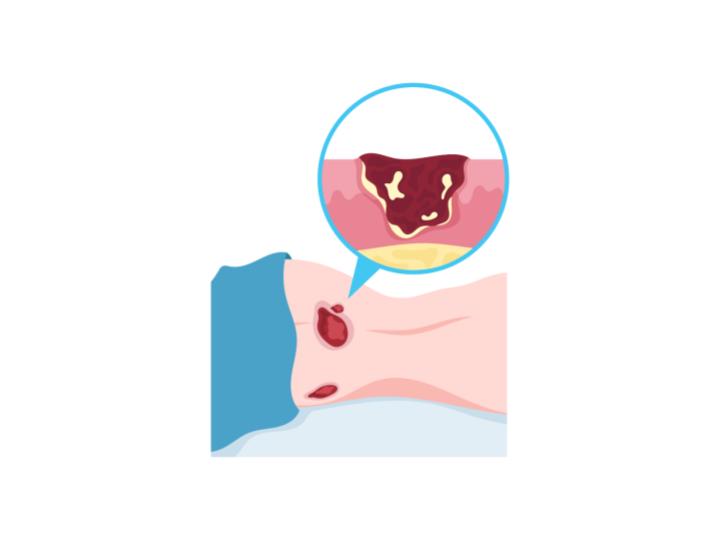
Bed sores are caused by prolonged pressure on the skin and soft parts of the body. It creates an ulcer-type wound at the site of pressure. Bed sores are also known as pressure injuries.
Causes and Risk Factors of Bed Sores
- The person experiences decreased mobility and is bedridden for more extended periods.
- Poor nutritional Status
- The person suffering from the following conditions is at more risk of developing bed sores.
- Neurological diseases
- Systemic diseases
- Malnutrition
- Surgical patients
- Low Blood pressure or Hypotension
- A patient who has undergone surgery.
These diseases require patients to rest for an extended period, resulting in fatigue and weakness. Prolonged pressure on the skin and soft tissues can rupture the capillaries, which are small blood vessels present throughout the body. Over time, this builds up dead tissue at the pressure site, and further, it results in ulcers due to an inflammatory response.
Staging of Bed Sores.
Stage 1: Skin is delicate, but it is red and itchy
Stage 2:Skin is broken and it looks like a blister or abrasion
Stage 3: The Skin gets affected very deeply and develops a deep ulcer
Stage 4: The bed sore is very deep and it extends up to the skin, muscle, and joints.
Unstable. At this stage, it is challenging to determine the extent of the injury.
Diagnosis of Bed Sores
Diagnosis of Bed sores is done by detailed physical examination of the site of injury. The stage is diagnosed based on the clinical features.
Treatment of Bed Sores
- Ointment application
- Wound care and dressings
- Oral Medications
- Intravenous medications
- Management of primary disease
Diet and Lifestyle Tips
- Proper wound care is necessary.
- Family counselling
- A nutritious and balanced diet.
- Encourage mobility and changes of position frequently in a bedridden patient after 2-3 hours.
Consult a medical professional on time to avoid further complications of diseases. Do not miss regular health checkups and routine diagnostic tests advised by your doctor. Digital platforms enable online consultations with doctors and provide a facility for at-home blood testing.